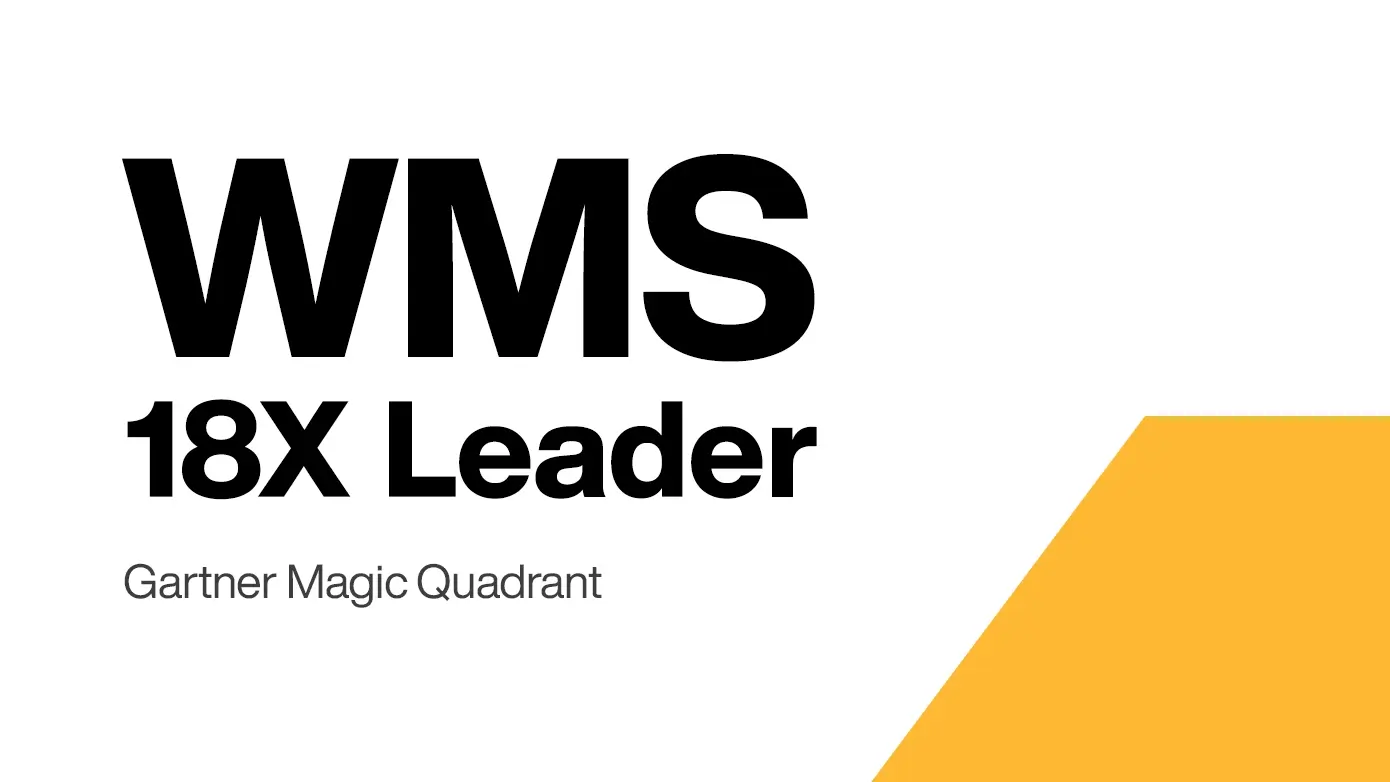
18
time leader
Manhattan is an 18-time Leader in Gartner's Magic Quadrant for Warehouse Management Systems.
ActiveWarehouse
Manhattan's Transportation Management System (TMS) is cloud-native software that helps shippers plan, optimize, and execute freight movement — managing carriers, rates, routes, and loads across the entire transportation network in real time.






The numbers behind unifying yard, warehouse, and transportation on one supply chain platform:
time leader

surveyed

In delays
Yard Management
A truck arrives early. The dock is still clearing a wave. Labor's tied up elsewhere. Each system can be optimized on its own while the handoffs between them stay invisible, so congestion builds unnoticed until it's a missed appointment.
Monitor arrival variance, dwell, and detention risk in real time so teams can reprioritize trailers while there is still time to prevent avoidable delays and costs.
Coordinate trailer flow and dock door activity around live operating conditions so doors spend less time waiting and freight keeps moving through the facility.
Use trailer contents, shortage exceptions, flow-through demand and warehouse priorities to determine which freight should move next instead of relying on static sequencing.
Coordinate trailer, dock and arrival decisions with live warehouse and transportation context so the yard responds to what the broader operation needs next.
Features
Turn live yard, warehouse, and transportation conditions into coordinated trailer and dock decisions that keep freight moving and doors productive.

Know what is arriving, waiting, moving, and working across the yard.
See trailers, dock doors, yard positions, pending arrivals, and trailer contents in a live graphical view, with the context to identify congestion and exceptions quickly.
Track dock progress, trailer status, and activity history across inbound and outbound operations so supervisors can see what happened, what is happening, and what is waiting next, with real-time visibility.
Surface changing trailer status, dwell risk and operational exceptions as they develop, giving teams time to act before delays become missed appointments or added cost.
Maintain visibility across primary, secondary, temporary and offsite yard locations, with yard-audit capabilities to help confirm where trailers physically reside.

Prioritize trailers and dock doors around what the operation needs next.
Identify the best trailer for the next available door using yard conditions and live warehouse priorities, including putaway needs, shortage exceptions, and flow-through demand.
Dynamically assign dock doors across live and drop trailers using current yard conditions and over-the-road ETAs from Transportation Management, so doors flex as arrival timing changes—improving door utilization, increasing throughput, and reducing detention exposure.
Use trailer contents, warehouse putaway strategy, and facility layout to select the dock door that minimizes downstream putaway travel, reducing unnecessary movement and labor inside the warehouse.
Monitor arrival variance and duration of stay to identify trailers approaching detention or demurrage exposure and reprioritize work while there is still time to intervene.

Turn yard decisions into coordinated physical movement.
Schedule arrivals and streamline guard, mobile, and carrier check-in so trailers enter and leave the yard with less manual coordination and redundant data entry.
Determine the best yard slot or dock door using configurable rules, equipment and dock feasibility, live trailer needs and warehouse readiness.
Create and direct yard-jockey move tasks so trailer movements are assigned, executed, and tracked as part of the same yard workflow.
Begin dispositioning eligible inbound and cross-dock inventory before arrival so receiving decisions do not have to wait until the trailer reaches the door.
Gartner Operations Manager - Media
Virginia ABC rids itself of manual processes and enables full transaction traceability "from dock to truck" in its new distribution center adopting Manhattan's Warehouse Management System.

Built for Your Role
Yard Management shows up differently depending on where you sit. Here's what it looks like for each role:

From planning to execution, see how Manhattan’s solutions drive measurable improvements. The full case study shows what success can look like in action.
From planning to execution, see how Manhattan’s solutions drive measurable improvements. The full case study shows what success can look like in action.
From planning to execution, see how Manhattan’s solutions drive measurable improvements. The full case study shows what success can look like in action.
From planning to execution, see how Manhattan’s solutions drive measurable improvements. The full case study shows what success can look like in action.
From planning to execution, see how Manhattan’s solutions drive measurable improvements. The full case study shows what success can look like in action.
From planning to execution, see how Manhattan’s solutions drive measurable improvements. The full case study shows what success can look like in action.
From planning to execution, see how Manhattan’s solutions drive measurable improvements. The full case study shows what success can look like in action.
From planning to execution, see how Manhattan’s solutions drive measurable improvements. The full case study shows what success can look like in action.
From planning to execution, see how Manhattan’s solutions drive measurable improvements. The full case study shows what success can look like in action.
Yard Management
The yard is the part of the supply chain where the handoff happens: the space between a warehouse, distribution center, or manufacturing facility and the transportation that moves goods to their final destination. It's one of the most overlooked links in supply chain operations, and the part where logistics operations most often break down unnoticed.
A yard management system organizes, tracks, and manages everything happening in the yard of a distribution center or warehouse, bringing automation and real-time visibility to the inbound and outbound workflow so nothing sits waiting without a reason. It's the layer of your supply chain that connects what's happening at the dock to what's happening in the warehouse and on the road.
Yard Management, part of ActiveWarehouse™, builds directly on the yard functionality already inside Warehouse Management and runs on the same platform as transportation execution. Instead of acting as a buffer between the warehouse and the road, the yard becomes part of the same execution system, with trailer, door, and check-in decisions made using warehouse and transportation context a siloed yard application wouldn't have. That means fewer manual processes, a shorter learning curve, and no separate system integration project to make everything talk to each other.
Yard management is the day-to-day job of overseeing everything that happens in the yard, one piece of supply chain execution alongside warehouse and transportation. Yard logistics is the bigger picture: visibility and support for transportation units across your supply chain, including transportation planning, yard monitoring and billing, and execution.
Yes. Yard Management is part of ActiveWarehouse™ and unifies with transportation execution on the same platform.
Yard Management is part of ActiveWarehouse™ and is built to unify with Manhattan's warehouse and transportation execution specifically, sharing the same real-time application data. That shared data is what lets it make decisions a standalone yard system can't.
Common detention fees run 30–50 an hour, sometimes as high as $150. About 1 in 10 stops triggers a detention event, adding roughly 1.4 hours to average dwell time, and those detention charges add up to an estimated $15.1 billion a year in direct and productivity losses across the industry.
It's the capability behind Optimized Trailer Selection. It prioritizes which trailer gets which dock door next by weighing trailer content against warehouse putaway strategy, outbound demand, inventory shortages, cross-dock opportunities, transportation ETAs, and carrier requirements.
No. Now with Editions, Yard Management supports everything from a single site to complex, composite yard networks, including temporary, seasonal, shared, and permanent yard configurations.
Yard Management runs on the same cloud-native, microservices-based ActivePlatform as Manhattan's warehouse, transportation, and labor execution. Because yard, warehouse, transportation, and labor share the same application data, trailer, door, and check-in decisions happen in real time with the full operation in view, rather than through integrations between separate systems.
Lorem ipsum dolor sit amet, consectetur adipiscing elit, sed do eiusmod tempor incididunt ut labore et dolore magna aliqua. Ut enim ad minim veniam, quis nostrud exercitation ullamco laboris nisi ut aliquip ex ea commodo consequat. Duis aute irure dolor in reprehenderit in voluptate velit esse cillum dolore eu fugiat nulla pariatur.

Eyebrow

Lorem ipsum dolor sit amet, consectetur adipiscing elit, sed do eiusmod tempor incididunt ut labore et dolore magna aliqua.
June 23, 2026

Explore the technologies, partnerships and operational strategies shaping the next generation of connected commerce.
July 14, 2026


